
PMO can mean different things depending on context. On social media, PMO often means Put Me On. Sometimes it is used to say Pissed Me Off. In business settings, PMO stands for Project Management Office. Understanding which meaning applies helps avoid confusion. This guide will explore all those angles in an easy-to-follow way.
PMO Meaning in Texting and Slang
In texting, it often means “Put Me On.” I used to ask someone to share something cool. It can also mean Pissed Me Off. Context and tone tell you which meaning fits.
PMO in Text Messages
When someone texts PMO, it often means Put Me On or Pissed Me Off. It depends on the mood of the message. For example, That deal PMO, send me a link. It is casual and mostly among friends. Context and tone make the meaning clear.
Related guide:WTW Meaning – What Does WTW Mean In Text, Slang & Social Media?
PMO Meaning on TikTok
On TikTok, it is used in captions and comments to join trends or events. It can mean Put Me On when someone wants to be included in a challenge. Or it can mean Pissed Me Off when someone is annoyed. For example, When the filter PMO again 😤. The short‑form works well in fast, visual posts.
Related guide: In Touch LetsBuildUp.org: Empowering Real Community Change
PMO Meaning on Snapchat and Instagram
On Snapchat or Instagram, you will spot PMO in stories, DMs, or captions. Often it is “Put Me On” when someone asks to be featured or shown something cool. Sometimes it is “Pissed Me Off” to express frustration. For example, PMO in your story, where is that place? It is quick slang that keeps chats light and modern.
PMO in Urban Dictionary
In the online slang dictionary Urban Dictionary, PMO was first listed in 2005 as “pisses me off.
Later, around 2016, a new entry showed PMO meaning put me on. So when you see “PMO” in chats it could mean you want an intro (“put me on”) or you’re annoyed (pisses me off). For example, Hey, PMO with that playlist (put me on).
Related guide: Kroner Meaning: Exploring Currency, Slang And More
Variations of PMO in Slang
PMO in slang has many forms. It can mean “Put Me On” or “Pissed Me Off.” People mix it with other letters for fun. For example, TS PMO, why are you late? These variations are popular on TikTok, Snapchat and Instagram. They show how slang changes with context.

Some combos are common in Gen Z chats. For instance, ICL TS PMO can mean I Can’t Lie, That Sh*t Pissed Me Off. For example, ICL TS PMO, I agree with you.” Such acronyms make chatting faster and expressive. They evolve quickly as online trends change.
PMO Meaning in Business
A PMO is a Project Management Office. It helps companies manage projects better. PMOs track progress, budgets and resources. They make sure projects succeed on time and within scope.
PMO Definition
It is a team that manages projects in a company. It sets rules and standards for project work. For example, a PMO might create templates for reports. It helps teams work in an organized way. PMOs make projects run smoothly and efficiently.
PMO Objectives
Its aim is to improve project success. They focus on time, cost, and quality. For example, a PMO may track deadlines to avoid delays. They also support teams with guidance and tools. Their goal is to make projects predictable and successful.
PMO Types
PMOs in business come in different types. Supportive PMO gives advice and templates. Controlling PMO enforces rules. For example, A Directive PMO assigns managers to projects. The type depends on company size and project complexity.
Some PMOs focus on portfolios or programs. The Portfolio Management Office handles all projects for strategy alignment. For example, A company uses PfMO to track all IT initiatives.
Project Support Office helps teams with tools and templates.
Choosing the right type improves project success.
Core Functions of a PMO
A PMO sets standards and processes for projects. It provides tools, templates, and training. PMOs track project progress and manage resources. For example,a dashboard shows delayed projects. They align projects with business goals and strategies.

PMOs also improve communication with stakeholders. They enforce governance and ensure compliance. For example, PMO reports highlight project risks. They help teams deliver projects on time. PMOs increase efficiency and success rates.
PMO Categories by Organizational Hierarchy
PMOs can be organized by company level. Enterprise PMO manages all projects across the company. The departmental PMO focuses on one division.For example, the IT department runs its own PMO. Some PMOs are temporary for big projects.
Project-specific PMOs exist for single initiatives. They end when the project completes .For example, A construction firm creates a PMO for a bridge project. Hierarchy shows PMO scope and decision-making. It clarifies roles and reporting in the company.
PMO Examples in Real Organizations
Many companies use PMOs to manage projects. IT PMOs track software development. Healthcare PMOs monitor patient care initiatives.For example, A hospital uses a PMO for new health programs. Finance and construction firms also use PMOs. They help with planning, risk, and governance.
Some PMOs focus on large-scale portfolios. They ensure all projects align with strategy.For example, A government PMO monitors multiple departments. PMOs vary by industry, company size, and goals. They improve efficiency and reduce failures.
PMO Software and Tools
PMOs use software to manage tasks and projects. Tools like Jira, Trello, and Asana track work and progress. Dashboards give real-time project info. .For example, A PMO uses Trello to track all tasks. AI tools help predict risks and improve outcomes.
Automation tools save time for PMO teams. Templates and reporting software make work easier..For example, PMO dashboards show project KPIs. Collaboration tools improve teamwork. These tools increase efficiency and project success.
PMO Certification and Membership
| Certification / Membership | Description | Example |
| PMO Global Institute (PMOGI) | Offers PMO certification programs for professionals | Certified PMO Practitioner |
| PMP (Project Management Professional) | Widely recognized project management certification | PMP Certification from PMI |
| PMO Membership Communities | Networks for sharing best practices and learning | Joining PMO Global Network |
| Business Alignment & Leadership Training | Helps PMO professionals improve strategic skills | Leadership course for PMO managers |
| Online PMO Courses | Short online programs to learn PMO tools and processes | Udemy PMO Fundamentals Course |
PMO Challenges
PMOs face many challenges in modern organizations. One major issue is lack of clear goals. Teams often don’t understand the PMO’s purpose. Poor communication between departments can slow progress. Limited budgets make things harder to manage.
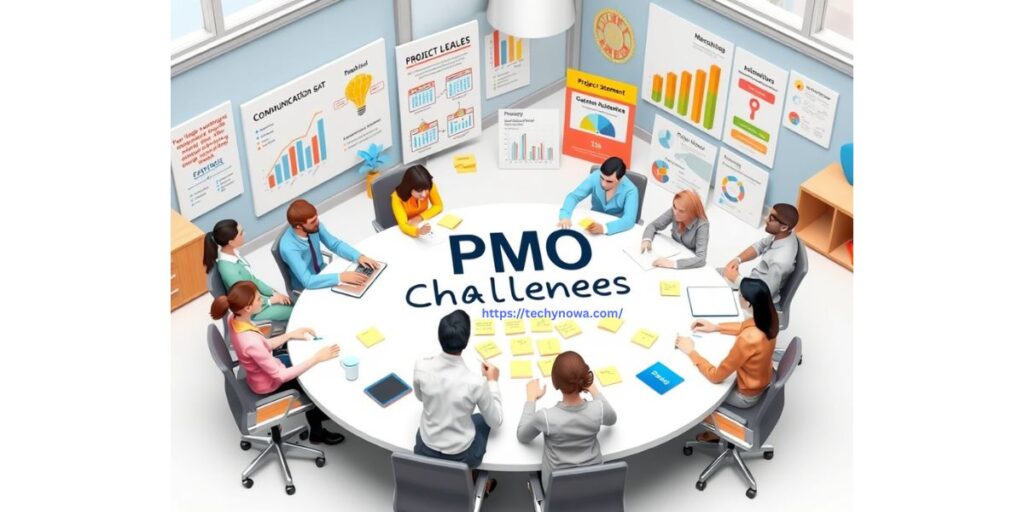
Changing company priorities also disrupt project plans. Resistance to change from staff adds more pressure. For example, a PMO in a tech firm struggled when management kept changing project timelines.
PMO ROI and Benefits
A strong PMO delivers great returns on investment. It improves project success rates across the company. Clear planning reduces wasted time and money. PMOs help teams meet deadlines more effectively. They also enhance communication and collaboration.
Stakeholders gain better project visibility and control. Decision-making becomes faster and more data-driven. For example, a bank’s PMO improved ROI by cutting project delays by 30%.
PMO vs Project Manager
A PMO and a project manager are not the same. The PMO oversees many projects at once. It creates standards, tools, and best practices. A project manager handles one project at a time. They focus on daily tasks and team coordination.
The PMO provides guidance and resources to project managers. Together, they ensure smooth project execution. For example, the PMO might design templates that project managers use for reporting.
The shift towards an outcomes focus
The PMO world is changing fast. Teams now focus more on results than just tasks. This helps businesses measure real impact. For example, instead of tracking hours, a PMO might track product launches. It also improves decision-making. Teams can see what works and what doesn’t. Stakeholders get more value from projects. This shift keeps organizations competitive.
Staying Ahead: How PMOs Can Navigate the Ever-Changing Tech Landscape
Technology changes quickly. PMOs must adapt to stay relevant. They need to understand new tools and trends. For example, using AI for project tracking saves time. Training teams on tech updates is key. PMOs should test tools before full adoption. They can also learn from other industries. Staying ahead avoids delays and failures.
The Teal Book: UK Government’s New Guide to Project Delivery
The Teal Book is a new government guide. It helps PMOs deliver projects effectively. It focuses on planning, risk, and outcomes. For example, it shows how to manage budgets carefully. The guide also encourages clear communication. Teams can follow best practices. It aims to improve success rates. PMOs get a reliable roadmap from it.
Spring Statement 2025: What UK PMOs and Portfolio Leaders Need to Know
The Spring Statement 2025 affects budgets and priorities. PMOs must align with new policies. They need to adjust plans quickly. For example, a funding change may delay a project. Leaders should track updates carefully. Teams must communicate changes clearly. Planning flexibility is more important than ever. This keeps portfolios on track.
PMO roles and responsibilities

PMOs have many tasks. They plan projects, track progress, and manage risks. They also support teams with tools and guidance. For example, a PMO might create a dashboard for all projects. They ensure budgets and timelines are followed. PMOs report to stakeholders regularly. They help teams work efficiently. Their role is vital for project success.
How popular are PMOs?
PMOs are growing in popularity worldwide. Many organizations now rely on them. They improve efficiency and decision-making. For example, a company might hire a PMO to oversee multiple projects. PMOs are common in IT, construction and finance. Teams trust them to guide priorities. They also help with reporting and compliance. Popularity keeps increasing as businesses see their value.
What is the role of a PMO?
A PMO guides and supports project teams. It tracks progress, budgets and risks. For example, a PMO may create dashboards to monitor projects. It ensures projects finish on time and meet goals.
Choose the exact project
PMOs help select the right projects. They check goals, budget and resources. For example, a PMO may prioritize a project that boosts sales. Choosing the right project saves time and money. It ensures the team works on what matters most.
Maintain employee awareness
PMOs keep teams informed about goals and updates. Clear communication improves focus and motivation. For example, a PMO may share weekly progress reports. Awareness prevents misunderstandings and delays. It helps everyone stay on the same page.
Managing resources effectively
PMOs ensure people, tools,and money are used wisely. They track availability and allocation. For example, a PMO may move staff to high-priority tasks. Effective management avoids overload and waste. It keeps projects on schedule and within budget.
Tool mobilization for projects
PMOs provide the right tools for success. Tools help with planning, tracking, and reporting. For example, using project management software makes tasks visible. Mobilizing tools improves efficiency. Teams can work smarter and faster.
PMO trainers and coaches

PMO trainers help teams improve skills. They teach project management tools and methods. Coaches guide teams through challenges. For example, a coach might show how to manage tight deadlines. Trainers provide workshops and resources. Coaches give feedback on performance. They also help with career growth. Both make PMOs more effective and confident.
How PMOs Establish KPIs
KPIs measure project and PMO success. They track performance, cost and time. For example, a KPI might track project completion rate. PMOs choose KPIs that match goals. They ensure KPIs are clear and measurable. Teams review KPIs regularly. Adjustments are made if targets are missed. KPIs keep everyone focused on results.
The Future of PMO
The PMO’s future looks bright and more digital. Automation and AI will simplify project tracking. Data analytics will help predict risks early. Remote teams will make PMOs more flexible. Agile and hybrid methods will shape future strategies.
PMOs will focus more on value than control. Soft skills and leadership will become essential. For example, a future PMO might use AI tools to forecast project success rates.
My Personal Experience and Expertise with PMOs
I have worked with several PMOs in different industries. Each experience taught me something new about project success. I learned how planning and teamwork make a big difference. Managing deadlines and budgets became second nature. These experiences helped me grow into a confident project professional.
Over time, I developed strong skills in communication and organization. I helped teams set goals and track progress effectively. My focus was always on improving performance and results. I also guided new project managers in using PMO tools. These moments shaped my expertise in project management
Frequently Asked Questions
What does PMO mean?
PMO means Project Management Office.
What does a PMO do?
It manages and supports projects.
Why is a PMO important?
It keeps projects on track and within budget.
Who leads a PMO?
A PMO Manager or Director.
Are there types of PMOs?
Yes, supportive, controlling, and directive.
Do small businesses need a PMO?
Yes, it helps them stay organized.
How does a PMO help a company?
It improves efficiency and project success.
Conclusion
The PMO plays a key role in every business. It helps teams plan and manage projects better. A PMO builds structure and improves results. PMO Meaning: Slang, Text, and Business Explained gives you a full view of what it really stands for. The term can mean different things in different contexts. But in business, it always points to better project control and success.
Understanding PMO helps you work smarter. It saves time and reduces mistakes. Every company can benefit from a strong PMO system. It keeps projects aligned with company goals. The idea is simple but very powerful. With PMO, teams deliver quality work faster and more efficiently.